Europe Swelters in Fifth Heatwave of the Year as Extreme Heat Tests Continental Resilience

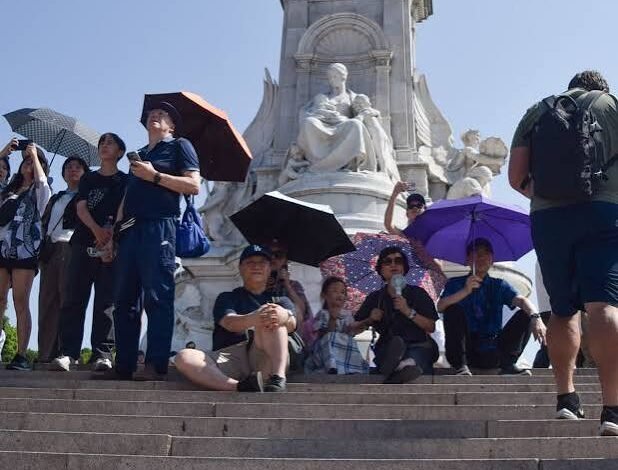
Europe swelters in fifth heatwave of the year, and the feeling across the continent is one of exhaustion mixed with growing concern. From the sun-baked streets of Madrid and Rome to the usually milder cities of Berlin and Warsaw, people are once again seeking shade, rationing water, and watching the forecasts with a mix of dread and resignation. This latest episode, driven by a stubborn high-pressure system, marks the fifth major heat spell since May, turning what many once considered a pleasant European summer into a season defined by warnings, restrictions, and disruption.
The numbers tell a clear story. Temperatures have already climbed past 40 degrees Celsius in parts of western Europe, with forecasts pointing to similar or higher readings as the heat expands eastward into Central Europe. Dry soils, depleted rivers, and elevated fire danger compound the challenge. For residents and visitors alike, the pattern feels relentless. Many say the joy of summer has been replaced by a constant need to adapt. Europe swelters in fifth heatwave of the year, and the cumulative strain is becoming impossible to ignore.
This is not just another stretch of hot weather. Scientists have repeatedly linked the increasing frequency and intensity of such events to human-driven climate change. Europe is warming faster than any other continent, and the consequences are playing out in real time through health pressures, agricultural stress, energy system strain, and shifting tourism patterns. Understanding what is happening, why it matters, and how communities are responding offers a clearer picture of a continent learning to live with a new climate reality.
Understanding the Heat Dome Driving the Current Episode
A powerful high-pressure system, often described as a heat dome, sits over the heart of the continent and acts like a lid trapping warm air. Sinking air compresses and heats further, while clear skies allow intense sunshine to bake the ground day after day. Moisture remains limited, so soils dry out quickly and offer little evaporative cooling. The result is prolonged periods of high temperatures that linger rather than pass quickly with a cold front.
Meteorologists note that these blocking patterns have become more persistent in recent years. When the jet stream meanders strongly, it can lock weather systems in place for days or even longer. In this case, the dome has allowed hot air originating from southern latitudes to spread northward and then eastward. Western areas felt the peak first, with Central European countries preparing for the next phase. Forecasts indicated temperatures reaching the high 30s to low 40s Celsius in multiple countries, accompanied by very high fire danger ratings from the European Forest Fire Information System across a broad swath of territory.
The persistence matters as much as the peak values. Nighttime temperatures that stay elevated prevent the body and buildings from recovering. Hospitals report increased admissions, outdoor workers face restricted hours, and energy demand for cooling rises sharply. Europe swelters in fifth heatwave of the year under conditions that feel increasingly familiar yet still extreme by historical standards.
Looking Back at the Summer’s Earlier Heat Spells
The season began early. A significant heat event arrived in late May, followed by an even more intense episode in late June that shattered numerous national and all-time records. In that June wave, Germany recorded 41.7 degrees Celsius, the Czech Republic reached 41.9 degrees, and Poland hit 40.5 degrees, breaking a record that had stood for more than a century. Denmark, Switzerland, and other nations also saw exceptional readings. Excess mortality estimates climbed into the thousands across the affected regions.
Those earlier episodes left soils dry and water reservoirs lower than usual. Vegetation became more flammable. Infrastructure already stressed by previous heat showed residual effects. By the time the fifth major spell arrived in mid-August, the baseline conditions across much of Europe were already compromised. Rivers such as the Elbe displayed unusually low levels, complicating navigation and cooling for power plants. Crops faced cumulative heat and water stress that no single rain event could fully reverse.
Comparing the current situation with past decades underscores the shift. Events that once ranked as rare now occur with greater frequency. Scientists analyzing the June episode concluded that the temperatures observed would have been virtually impossible in a pre-industrial or even mid-20th-century climate. The same underlying warming that amplified earlier waves is contributing to the intensity of the present one. Europe swelters in fifth heatwave of the year against a backdrop of successive extremes rather than isolated incidents.
Immediate Impacts on Daily Life and Public Health
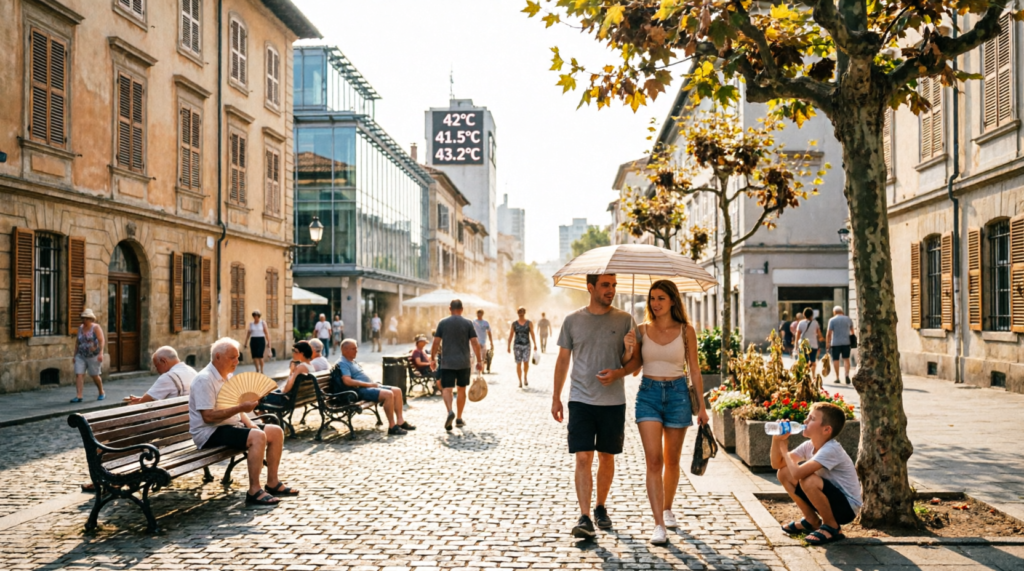
For ordinary people, the heat translates into practical adjustments and genuine risks. Cities open cooling centers and extend pool hours. Authorities issue alerts urging residents to stay indoors during peak afternoon hours, drink water regularly, and check on elderly neighbors. Hospitals prepare for higher numbers of heat-related cases, including dehydration, heat exhaustion, and exacerbation of chronic conditions.
Vulnerable groups face the greatest danger. Older adults, young children, outdoor laborers, and those without access to air conditioning experience the highest exposure. Many European homes were designed for cooler conditions and retain heat rather than shed it. In some urban neighborhoods, the combination of dense buildings, limited green space, and asphalt creates urban heat islands that push nighttime temperatures even higher.
Tourism has also felt the effects. Popular destinations that once thrived on summer visitors now contend with cancellations, shortened outdoor activities, and safety concerns around wildfires. Travelers report seeking air-conditioned museums or early-morning outings instead of leisurely afternoons in historic squares. Local businesses that depend on seasonal trade adapt by shifting hours or emphasizing indoor experiences. Europe swelters in fifth heatwave of the year, and the traditional rhythm of summer travel is changing along with the weather.
Wildfire Risks and Environmental Stress Across Regions
Dry vegetation and low soil moisture create ideal conditions for rapid fire spread. The European Forest Fire Information System has placed extensive areas under the highest danger categories, covering parts of Central and Eastern Europe, the Alps region, the Balkans, southern Britain, and portions of France and Sweden. Firefighters remain on elevated alert, and some regions have imposed temporary bans on outdoor burning or restricted access to forests.
Past seasons have already demonstrated how quickly fires can escalate under these conditions. Hundreds of thousands of acres have burned in recent years in Spain, France, and other countries. Smoke can travel long distances, affecting air quality far from the flames. Ecosystems suffer as well. Forests that experience repeated drought and heat become more susceptible to pests and disease. Wetlands and rivers lose volume, stressing aquatic life and reducing the natural cooling services they provide.
Agriculture absorbs simultaneous pressure. Heat accelerates crop development in some cases but often reduces yields when combined with water scarcity. Wine regions have advanced harvests to protect grape quality. Grain and vegetable producers monitor soil moisture closely and, where possible, adjust irrigation. Livestock require extra care to prevent heat stress. These cascading effects ripple through food prices and rural economies. Europe swelters in fifth heatwave of the year while the natural systems that support communities face mounting strain.
Temperature Extremes and Record Context in a Changing Climate
To put the current conditions in perspective, consider selected peak readings and impacts from the broader 2026 season:
| Country or Region | Notable Peak Temperature | Key Observed Impact |
|---|---|---|
| Spain | Up to 42°C in southern and northeastern areas | High fire danger, water restrictions |
| France | Around 40°C in western regions | Wildfire warnings, early grape harvests |
| Germany | Forecast highs near 38°C, earlier season record 41.7°C | Infrastructure stress, energy demand |
| Czech Republic | Earlier record 41.9°C, current forecasts into the mid-30s | Health alerts, dry conditions |
| Poland | Earlier record 40.5°C, forecasts near 37°C | Public messaging on heat safety |
| Italy | 40°C in multiple southern and central areas | Red health alerts across monitored cities |
| United Kingdom | Near 38°C in parts of England | Government coordination meetings, hospital pressures |
These figures illustrate both the intensity of individual events and the geographic spread. What stands out is not only the absolute values but how frequently they now occur earlier or later in the season and across a wider area.
Climate scientists emphasize that the baseline warming makes extreme outliers more attainable. Friederike Otto of Imperial College London has noted that researchers can sound like a broken record because the pattern repeats: each new extreme carries the clear fingerprint of human-caused warming. Theodore Keeping, another researcher involved in attribution studies, has pointed out that events of this severity would have been virtually impossible in earlier climates. The science is consistent across multiple analyses of the 2026 heat episodes.
Energy Systems, Infrastructure, and Economic Ripples
Power grids face dual pressure. Demand for air conditioning and cooling rises sharply while some thermal power plants must reduce output if river water used for cooling becomes too warm or scarce. In certain cases, nuclear facilities have adjusted operations. Renewable sources such as solar perform well under clear skies, yet overall system balance requires careful management.
Transportation infrastructure also reacts. Roads can soften or buckle in extreme heat. Rail tracks expand and may require speed restrictions. Airports monitor runway conditions and aircraft performance. Cities that rely on older building stock see higher cooling costs and, in some cases, temporary closures of non-essential facilities.
The economic dimensions extend further. Reduced labor productivity during extreme heat hours affects outdoor industries and even indoor workplaces without adequate cooling. Insurance claims related to heat, drought, and fire add up. Tourism revenue shifts geographically or seasonally. Governments respond with emergency measures, public messaging campaigns, and longer-term planning for resilience. Europe swelters in fifth heatwave of the year, and the costs accumulate across multiple sectors of society.
How Communities and Individuals Are Adapting
Practical responses have become more widespread. Cities expand green spaces, plant trees for shade, and install temporary misting stations. Employers adjust work schedules for outdoor staff. Schools and public institutions monitor indoor temperatures and modify activities. Individuals carry water bottles, plan outdoor tasks for cooler hours, and check on relatives living alone.
Some regions have accelerated investments in cooling infrastructure, building codes that favor better insulation and passive design, and early-warning systems that reach vulnerable populations more effectively. Public health agencies refine heat-health action plans based on lessons from previous summers. Farmers experiment with more heat-tolerant varieties and improved water management. These adaptations do not eliminate the risks, but they reduce exposure and improve recovery capacity.
Yet adaptation has limits. Not every household can afford air conditioning or major home upgrades. Rural areas may lack the same resources as major cities. Equity questions arise when the people least responsible for historical emissions face some of the highest relative impacts. Addressing the root drivers of warming remains essential alongside practical coping measures.
Broader Climate Context and the Road Ahead
Europe’s rapid warming rate, roughly twice the global average according to multiple assessments, sets the stage for continued challenges. Heatwaves that once occurred rarely now arrive with greater regularity and intensity. Attribution studies consistently show that human greenhouse gas emissions have made the observed extremes far more likely and severe.
Looking forward, the trajectory depends heavily on the pace of emissions reductions. Rapid cuts in fossil fuel use, accelerated deployment of clean energy, and protection of natural carbon sinks can limit the additional warming that would otherwise make future summers even more extreme. At the same time, societies must invest in resilience: cooler cities, stronger health systems, more flexible agriculture, and better-prepared infrastructure.
The current episode serves as another reminder rather than an isolated crisis. Europe swelters in fifth heatwave of the year, yet the underlying trends point to a future in which such language becomes commonplace unless decisive action continues. Public awareness has grown, and policy discussions increasingly treat extreme heat as a core planning consideration rather than an occasional inconvenience.
Voices from the Ground and Expert Perspectives
Residents describe a summer that feels different from those of their childhood. Tourists note that the classic European vacation experience now includes careful heat management. Officials convene special meetings to coordinate responses. Scientists continue to communicate the link between emissions and extremes with clarity and urgency.
One consistent theme in expert commentary is the preventable nature of further intensification. Solutions exist in the form of cleaner energy systems, efficient buildings, and nature-based approaches that reduce urban temperatures. Implementing them at scale remains the central challenge. As one researcher put it in the context of earlier 2026 analysis, the question is what kind of future societies choose to build.
Conclusion: Living with a Changed Summer Season
Europe swelters in fifth heatwave of the year, and the experience underscores a fundamental shift in the continent’s climate. The combination of a persistent heat dome, dry preconditioning from earlier events, and underlying warming has produced another demanding episode with wide-ranging effects on health, nature, infrastructure, and daily routines. Records continue to fall, risks escalate, and communities respond with a mixture of short-term coping and longer-term planning.
The story is not only one of hardship. It is also a story of increasing awareness, scientific clarity, and practical innovation. Better early-warning systems, greener urban design, adjusted agricultural practices, and stronger public health measures all contribute to greater resilience. At the same time, the only way to limit the severity of future heatwaves is to reduce the emissions that drive global warming.
As temperatures eventually ease with the arrival of cooler air or seasonal change, the lessons of this summer will remain. Europe’s climate is evolving, and so must the approaches used to live within it. The fifth heatwave of the year is a stark illustration of present realities and a call to accelerate both adaptation and mitigation. The continent has faced extreme heat before, but the frequency and cumulative impact of recent years demand sustained attention and action.
What makes this the fifth heatwave of the year in Europe?
Multiple distinct periods of extreme heat have affected large parts of the continent since May 2026. Meteorological agencies and media tracking have identified five major episodes separated by temporary breaks. Each has featured high temperatures, elevated fire danger, and notable societal impacts, with the current one driven by a strong heat dome over central regions.
How does climate change contribute when Europe swelters in fifth heatwave of the year?
Attribution studies show that human-caused warming has made the temperatures observed in 2026 events far more likely and intense than they would have been in earlier climates. Europe is warming faster than the global average, increasing both the frequency of heatwaves and their peak severity. Nighttime temperatures and humidity levels that compound health risks have also become more extreme.
Which regions face the highest risks during this heat episode?
Western and southern areas including Spain, France, and Italy have experienced some of the highest temperatures, while Central European countries such as Germany, Poland, and the Czech Republic face the expanding heat. Fire danger remains elevated across a broad zone from the Alps through Eastern Europe and into parts of Britain and Scandinavia.
What practical steps can people take to stay safe?
Stay hydrated, limit outdoor activity during peak heat hours, seek air-conditioned or shaded spaces, check on vulnerable neighbors, and follow local authority guidance. Employers should adjust schedules for outdoor workers. Monitoring official forecasts and heat alerts provides timely information for personal decisions.
How might repeated heatwaves affect Europe’s long-term future?
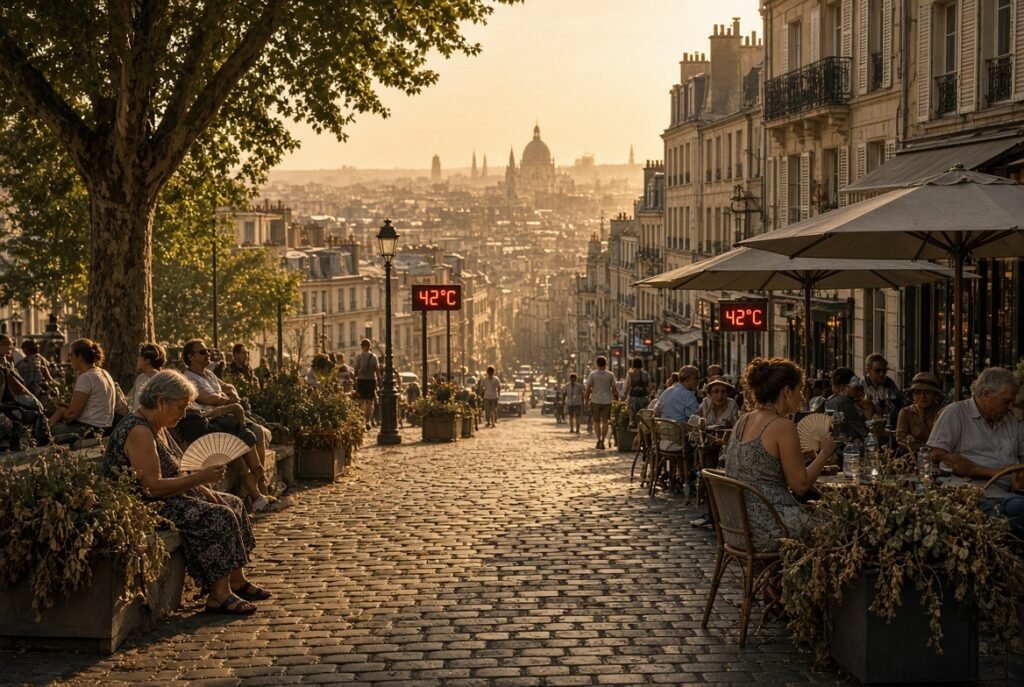
Without rapid emissions reductions, extreme heat is projected to become more common and severe. This would increase pressure on health systems, agriculture, energy infrastructure, and ecosystems. Concurrent investments in resilience can reduce harm, but limiting further warming remains essential to avoid even greater challenges in coming decades.