
You just got a message that simply says “myf” and now you’re staring at your phone wondering what it means. Is it sweet? Is it an apology? Is someone telling you to back off? The truth is that the myf meaning in text is not locked to one single definition, and that is exactly why so many people search for it. Most of the time it stands for “Miss Your Face,” a light, affectionate way of saying you miss seeing someone without the full emotional weight of “I miss you.” Other times it can mean “My Fault,” a quick casual admission of a small mistake, or even something sharper depending on the conversation.
This guide walks you through every common interpretation, shows real examples from everyday chats, explains how tone and platform shift the meaning, and helps you reply without awkwardness. By the end you will feel confident reading and using the phrase yourself. The myf meaning in text has become one of those modern slang shortcuts that keep conversations feeling natural and low-pressure, and understanding it makes digital talks smoother.
People love short forms because typing full sentences on a phone can feel like too much effort. MYF fits perfectly into that habit. It is quick to type, easy to understand once you know the possibilities, and flexible enough to work between friends, partners, or even casual acquaintances. The key is always looking at the surrounding words, emojis, and relationship history rather than the three letters alone.
Primary Interpretation as Miss Your Face
The most widespread and warmly received version of the myf meaning in text is “Miss Your Face.” It is a softer, slightly playful alternative to saying you miss someone. Instead of landing heavy or overly serious, it keeps the vibe light and personal. You will see it after long gaps in conversation, after someone posts a selfie or story, or when friends simply want to reconnect without making a big deal.
Picture this: a friend you have not seen in weeks posts a casual photo. You reply “myf” with a smiling emoji. The message feels caring without putting pressure on either of you. Couples use it too, often with hearts or pleading faces, to keep the connection alive during busy stretches. Family members drop it when someone is away at school or work. The phrase works because it focuses on the visual, the actual face you miss seeing, which feels more specific and intimate than a generic “miss you.”
This version thrives in private messages and close relationships. It rarely appears in public comments unless the people already know each other well. The tone is almost always positive. Soft emojis like hearts, smiling faces, or the pleading face make the affectionate reading even clearer. When someone adds “so much” or “right now” after the letters, the warmth increases. Over time the phrase has settled into everyday slang precisely because it solves a common problem: wanting to show care without sounding dramatic.
Alternative Reading as My Fault
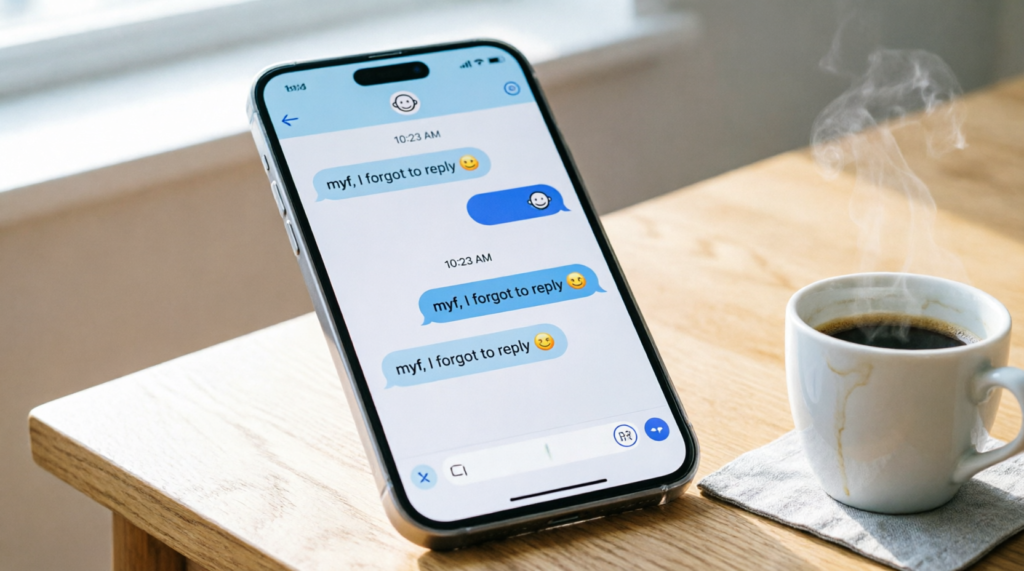
Another frequent take on the myf meaning in text is simply “My Fault.” This version acts like a shorter, more casual cousin of “my bad.” Someone owns a small slip, forgets to reply, sends the wrong file, or shows up late and types “myf” instead of a longer apology. It keeps the exchange moving without turning a minor mistake into a formal conversation.
You will notice this reading most often when the message comes right after an error. “I thought the meeting was at three. Myf.” Or “Forgot to send the link earlier, myf.” The tone stays light and responsible rather than heavy with guilt. In group chats it helps everyone stay focused instead of lingering on the slip. Friends and coworkers both use it because it signals accountability without drama.
Distinguishing this from the affectionate version is usually easy once you look at the rest of the message. If the conversation involves a mistake, a correction, or an explanation for something that went wrong, “My Fault” is the natural fit. Emojis tend to be embarrassed faces or simple shrugs rather than hearts. Knowing both possibilities stops you from reading romance into an apology or treating a sweet check-in as an admission of guilt.
Less Common but Still Relevant Interpretations
Beyond the two main readings, the myf meaning in text can stretch further in specific circles. Some people treat it as a clipped “Mind Your F***ing Business,” especially when paired with “business” or “life.” The full phrase softens a bit when written as MYF, yet the intent remains clear: stop prying. Tone decides whether the message feels playful or genuinely annoyed. A laughing emoji can make it teasing; a blank message with no extra words can feel sharper.
In a few friendly groups the letters simply stand for “My Friend.” This usage is rarer and usually appears as a casual address rather than a full sentence. You might see “thanks myf” or “hey myf, you free later?” It works like “dude” or “mate” but stays more neutral. Motivational or niche corners occasionally invent other expansions, yet those rarely stick in everyday texting.
The variety exists because internet slang evolves through use rather than official rules. People invent shortcuts, others adopt them, and context does the rest of the work. When you meet an unfamiliar expansion, the safest move is to ask politely or simply mirror the tone of the conversation. Most of the time the two primary meanings cover the vast majority of real messages.
How Platform Shapes the Way People Use It
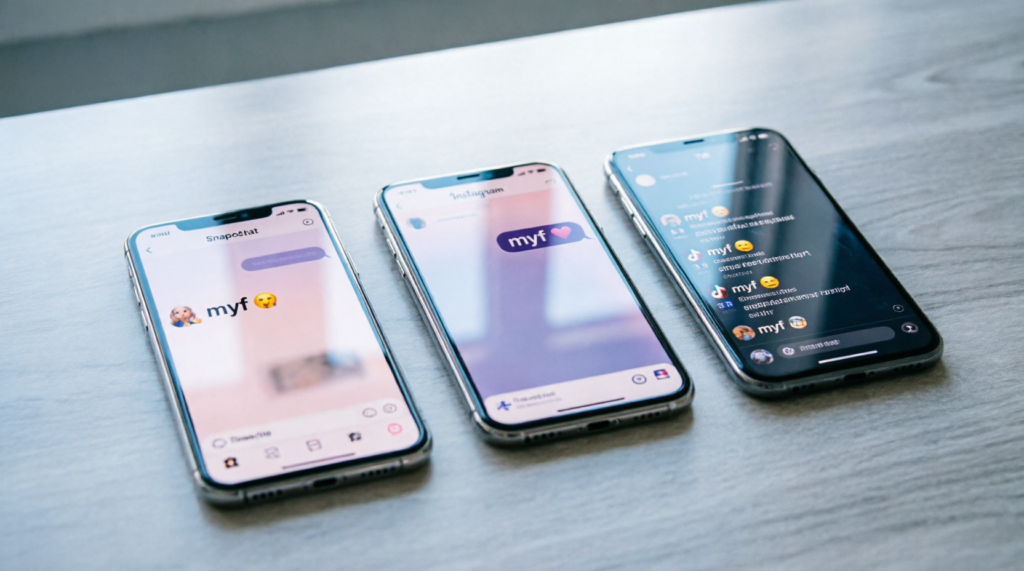
Different apps encourage slightly different habits, and the myf meaning in text shifts accordingly. On Snapchat the affectionate “Miss Your Face” version feels right at home. The whole platform revolves around photos and short videos of faces, so saying you miss someone’s face fits the medium perfectly. Streaks, story replies, and late-night snaps often carry the phrase with hearts or crying-laughing faces.
Instagram DMs and story replies lean the same direction. Someone posts a casual selfie and receives “myf” as a soft compliment and check-in rolled into one. Public comments stay rarer because the phrase feels more private. TikTok comments and captions sometimes favor the “My Fault” reading, especially when creators correct information or own a joke that landed wrong. The fast, semi-public nature of the platform makes short admissions convenient.
WhatsApp and regular SMS keep the meaning more personal. Conversations there tend to be longer and more sequential, so both main interpretations appear depending on the thread. Discord and gaming chats occasionally invent local twists, yet the core affectionate or apologetic uses still dominate. Across every platform the surrounding conversation remains the best guide. Platform culture nudges the odds, but people still choose the meaning that fits the moment.
Reading Tone and Emojis Correctly
Because the letters alone stay ambiguous, everything around them does the real work. Soft, warm emojis almost always point to “Miss Your Face.” Hearts, smiling faces, the pleading face, or even a simple flower turn the message affectionate. A message that follows a selfie, an old photo, or a long gap in contact strengthens that reading.
Apologetic or corrective language points the other way. Phrases like “I messed up,” “forgot,” or “sent the wrong one” paired with “myf” signal “My Fault.” Neutral or blank messages require more care. Look at the relationship history. Close friends and partners lean affectionate more often. Newer acquaintances or professional contacts lean toward the apology reading if any error is involved.
Timing matters too. A random “myf” at midnight after days of silence usually means the sender is thinking about you. The same letters right after a missed deadline or wrong address almost always mean they are taking responsibility. Learning to scan these small signals becomes second nature once you have seen a few real examples. The myf meaning in text rewards attention to detail more than any dictionary definition.
Practical Examples From Everyday Conversations
Real messages show the range better than any abstract explanation. A friend texts after seeing your travel stories: “Looks like you’re having fun. Myf though.” The tone is warm and a little wistful. A partner sends “myf” with a string of heart emojis after a busy week apart. The meaning is clear without needing extra words.
On the apology side someone writes “I thought we said seven. Myf, running late.” The conversation moves forward without friction. Another person realizes they left a friend on read and follows up with “Sorry, myf. Got buried in work.” Both sides understand the intent immediately.
Mixed cases appear too. A playful “myf business” after a nosy question can make a group laugh. A soft “myf” from a distant relative can reopen a quiet chat. Collecting these examples in your mind helps you respond naturally instead of freezing over the three letters. The more you notice the patterns, the faster the correct reading becomes automatic.
Smart Ways to Reply Without Awkwardness
When the message means “Miss Your Face,” matching the energy works best. A simple “Myf too” or “Same, we need to hang soon” keeps the warmth going. Adding a plan or a photo can deepen the connection if the relationship supports it. Overthinking the reply is unnecessary; the original message was already light.
If the letters mean “My Fault,” a short acceptance keeps things easy. “No worries” or “All good” usually closes the loop. If the mistake actually mattered, you can still address it without making the other person feel worse. The casual nature of the original admission already signals they want to move on.
When you are unsure, a gentle clarifying question works. “Wait, which myf?” or “Miss you or my bad?” delivered with a laughing emoji rarely causes offense. Most people appreciate the honesty and will explain. Over time you will need the question less often because the surrounding clues become obvious.
Table of Common Meanings and Typical Contexts
| Meaning | Typical Tone | Common Platforms | Example Message |
|---|---|---|---|
| Miss Your Face | Warm, affectionate | Snapchat, Instagram DMs, WhatsApp | “Haven’t seen you in ages. Myf ” |
| My Fault | Casual, responsible | TikTok comments, group chats, SMS | “Sent the wrong link earlier. Myf” |
| Mind Your Business | Playful to sharp | Private chats, Discord | “Who I’m talking to is myf business” |
| My Friend | Friendly, casual | Group texts | “Thanks myf, appreciate the help” |
This quick reference helps when you need a fast reminder. The table does not replace reading the full conversation, yet it organizes the most frequent patterns in one place. Notice how tone and platform interact. The same three letters can travel from soft to firm simply by changing the company they keep.
Quotes That Capture the Feeling Behind the Phrase
One frequent user summed it up nicely: “Myf is the perfect middle ground. It says I care without making anyone feel pressured to respond with a novel.” Another person described the apology version: “When I type myf after a small mess-up, it feels honest and quick. No big production needed.”
A third perspective focused on the visual side: “Saying I miss your face feels more real than a generic miss you. Faces are what we actually remember when someone is gone.” These voices show why the phrase stuck. It fills a small emotional and practical gap that longer sentences sometimes overfill.
Why This Slang Spread So Quickly
Short forms thrive because phones reward speed. People want to stay connected without investing heavy emotional labor every time. “Miss Your Face” delivers care in three letters. “My Fault” delivers accountability the same way. Both solve real conversational needs.
Social media accelerated the spread. Snapchat’s visual focus made the face-related meaning natural. TikTok’s rapid comment culture favored the quick apology. Once enough people used the letters in public or semi-public spaces, the meanings solidified through repetition rather than any official announcement. The myf meaning in text now belongs to the shared toolkit of modern digital talk, sitting alongside older shortcuts like lol, idk, and brb.
Related Slang That Often Appears Nearby
People who use MYF also tend to reach for other light affectionate or apologetic phrases. “Miss you” remains the longer sibling. “My bad” competes directly with the fault reading. “Ily” or “ily” can appear in the same warm conversations. “Wyd” often follows a “myf” when someone wants to turn the missing feeling into actual plans.
Knowing these neighbors helps you stay fluent. The myf meaning in text rarely travels alone. It lives inside larger patterns of casual, efficient, emotionally aware messaging. Learning the whole neighborhood makes every individual phrase easier to place.
Common Mistakes People Make When They First Encounter It
Newcomers sometimes assume every instance is romantic. That leads to overthinking or awkward replies. Others treat every instance as an apology and respond with unnecessary forgiveness. Both errors disappear once context becomes the main tool.
Another frequent slip is using the phrase too early in a new relationship. Because it carries warmth, dropping it with someone you barely know can feel intense. Wait until the conversation already has some history. On the receiving side, answering a clear “Miss Your Face” with silence can feel colder than intended. A short matching reply keeps the door open.
How the Phrase Evolves With New Generations
Slang never stays frozen. Younger users sometimes invent fresh expansions or pair the letters with new emojis. Older users may stick closer to the original affectionate or apologetic readings. The core flexibility remains the real strength. As long as people need quick ways to show care or take responsibility, the letters will keep finding useful jobs.
Watching how the phrase travels across age groups and platforms offers a small window into how language itself adapts. The myf meaning in text is one living example of that larger process.
When to Use It Yourself and When to Choose Something Else
Use the affectionate version with people you already feel close to and when the moment feels light. Use the fault version when you want to own a small error without drama. Avoid both in formal emails, professional reports, or conversations that require clear, unambiguous language. When the stakes are high or the relationship is brand new, full sentences still serve better.
The phrase works best as seasoning rather than the main course. A conversation built entirely of three-letter shortcuts can start to feel thin. Mix in regular words so the connection stays rich.
FAQ
What is the most common myf meaning in text right now?
The most common myf meaning in text is “Miss Your Face.” It functions as a casual, affectionate way to say you miss seeing someone. The warmth stays light and the pressure stays low, which is why the version appears so often in private chats and story replies.
Can myf mean my fault in regular conversations?
Yes, the myf meaning in text can also be “My Fault.” This reading shows up when someone admits a small mistake or takes responsibility for a minor slip. Context usually makes the difference obvious within a sentence or two.
Does the myf meaning in text change on Snapchat versus TikTok?
Platform habits shift the odds. Snapchat favors the affectionate “Miss Your Face” reading because of its visual nature. TikTok comments more often use the “My Fault” version for quick corrections. The surrounding message still decides the final meaning on either app.
Is the myf meaning in text considered flirty?
It can feel flirty when sent between people who already share romantic or playful tension, especially with soft emojis. Between close friends it usually stays purely warm and platonic. Relationship history and tone decide the level of flirt more than the letters themselves.
How should I reply if I am unsure about the myf meaning in text?
A light clarifying question works well. Something like “Wait which myf, the miss you one or the my bad one?” with a laughing emoji keeps the exchange friendly. Most people will explain without taking offense, and the conversation continues smoothly.
Are there any other rare meanings I should know about?
Occasionally the letters stand for “Mind Your Business” in a playful or sharp way, or simply “My Friend” as a casual address. These readings stay less common. Stick to the two main interpretations unless the rest of the message clearly points elsewhere.
Conclusion
The myf meaning in text ultimately lives in the space between the letters and the people using them. Most of the time it means “Miss Your Face,” a gentle way to keep connections alive. Sometimes it means “My Fault,” a quick way to stay accountable. Context, tone, emojis, and relationship history turn the three letters into clear communication every time.
Once you start noticing the patterns, the phrase stops feeling mysterious and starts feeling useful. You can send it when you genuinely miss seeing someone, own a small mistake without fanfare, and read incoming messages with confidence. Digital conversation moves fast, and tools like this keep it human. The next time “myf” appears on your screen, you will know exactly how to meet it.