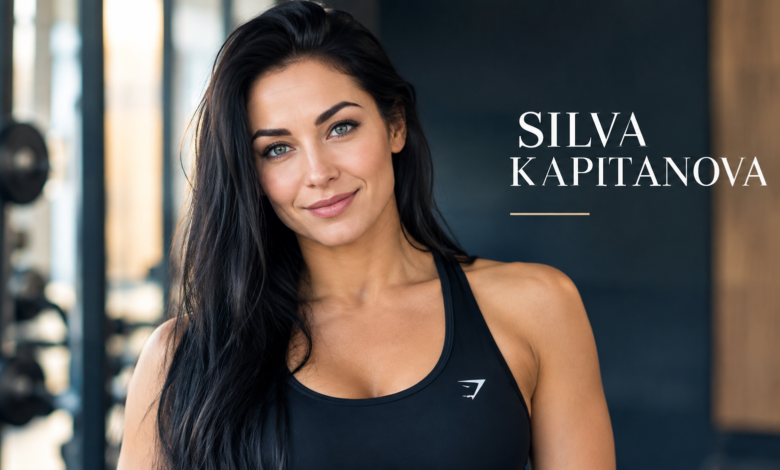
When people first hear the name Silva Kapitanova, they often picture the glamorous side of island living mixed with intense media attention. Yet behind the headlines sits a woman who built her path through discipline, movement, and quiet reinvention. Born in the coastal city of Burgas, Bulgaria, she trained for years in the demanding world of rhythmic gymnastics before transforming that foundation into a career helping others reclaim strength after major life changes. Her story blends athletic grit, entrepreneurial drive, and the realities of raising children while navigating unexpected public scrutiny. Living on Mallorca for more than a decade, she has become known for specialized postpartum work, Pilates-based training, and a lifestyle that prioritizes privacy even as cameras follow her every step. What makes her journey compelling is how ordinary school-gate moments and dedicated training sessions collided with the world of elite sport, creating a narrative that continues to unfold across Europe.
Readers searching for insight into Silva Kapitanova usually want more than tabloid snapshots. They want to understand the early training that shaped her body awareness, the decision to leave competitive sport, the years spent building a client base on a Mediterranean island, and the personal choices that later drew global attention. This long-form look explores those layers with care, drawing on publicly available details while focusing on the human elements of growth, adaptation, and resilience. The goal is to present a balanced, readable portrait that feels grounded rather than sensational.
Early Years in Burgas and the Foundations of Movement
Growing up in Burgas, a lively Black Sea port with a strong sporting tradition, Silva Kapitanova encountered movement almost as a natural language. The city offered access to clubs and coaches who understood the technical demands of rhythmic gymnastics, a discipline that combines balletic grace with apparatus work, flexibility, and precise timing. From a young age she spent long hours in the gym developing coordination, strength, and the kind of body awareness that later informed her coaching style. Family support played a quiet but essential role, recognizing talent early and providing the consistency needed for daily practice.
Those formative years were not only about physical drills. They instilled habits of focus, recovery, and progressive improvement that would serve her long after she left the competitive floor. Rhythmic gymnastics in Bulgaria carries national pride and high expectations, and even athletes who do not reach the absolute elite level absorb a professional mindset. For Silva Kapitanova this meant learning to listen to her body, manage training load, and appreciate the artistic side of sport. The coastal environment itself contributed, with sea air, outdoor activity, and a culture that valued physical expression. These early experiences created a base of knowledge she would later translate into practical programs for everyday clients rather than elite competitors.
By her mid-teens the intensity of training had become a central part of daily life. Competitions at regional level tested her under pressure, teaching mental toughness alongside technical skill. Although detailed competitive records remain limited in public sources, the overall trajectory shows a young woman who committed fully to the sport for roughly five years of serious participation. That period ended around 2015 when she made a deliberate shift away from the performance track. Rather than viewing the change as an ending, she treated it as an expansion of purpose, carrying the same standards into a new setting.
Transition Away from Competitive Sport and the Move to Mallorca
Leaving competitive rhythmic gymnastics required both practical planning and emotional adjustment. Silva Kapitanova recognized that the skills she had refined—control, alignment, progressive loading—could benefit people outside the high-performance bubble. In 2015 she relocated to Mallorca, an island known for its international community, favorable climate, and growing interest in wellness. The move offered fresh professional possibilities and a lifestyle that blended outdoor activity with a cosmopolitan client base. Mallorca’s mix of residents and visitors created natural demand for trainers who could deliver structured yet enjoyable sessions.
Settling on the island meant building a reputation from the ground up. Early work involved personal training, group classes, and experimenting with formats that combined dance elements, core stability, and functional movement. Her gymnastics background gave her an edge in teaching body awareness and safe progression, qualities that clients quickly noticed. Over time she refined her offerings, paying special attention to women recovering from pregnancy. That specialization grew from both professional observation and later personal experience, allowing her to design sessions that respected the unique demands of postpartum recovery. Core reconnection, gradual strength rebuilding, and realistic timelines became hallmarks of her approach.
Life on Mallorca also brought social connections that would shape the next chapter. The island’s international schools, cafes, and fitness spaces create overlapping circles where parents and professionals meet. For Silva Kapitanova these everyday environments provided both community and eventual personal turning points. Throughout the late 2010s she continued expanding her coaching practice while establishing a family base, demonstrating the ability to balance professional growth with private responsibilities.
Building a Fitness Career Centered on Specialized Support
The professional identity of Silva Kapitanova rests on more than general fitness instruction. She developed expertise in Pilates for alignment and stability, dance-inspired sessions for cardiovascular enjoyment, and highly targeted postpartum programs that help new mothers regain strength and confidence. Clients describe an approach that feels personal rather than one-size-fits-all. Instead of chasing extreme transformations, her sessions emphasize sustainable habits, proper form, and long-term function. This philosophy aligns with modern understanding of women’s health, where recovery is treated as a process rather than a race back to previous fitness levels.
Postpartum work in particular has become a signature area. After pregnancy the body undergoes significant changes in core function, pelvic floor integrity, and overall energy systems. Effective coaching requires knowledge of these shifts plus the patience to progress clients safely. Silva Kapitanova’s background in precise movement patterns proved valuable here. She could break exercises into manageable components, monitor form closely, and adjust intensity according to individual readiness. Many women on Mallorca sought her out precisely because of this nuanced understanding. Word-of-mouth referrals strengthened her standing within the local wellness community even as she kept a relatively low public profile compared with heavily branded influencers.
Beyond one-to-one sessions she has explored lifestyle coaching that integrates movement with daily routines. The Mediterranean setting of Mallorca supports this holistic view—outdoor walks, swimming, and community activities complement structured training. Language skills in Bulgarian, English, and German further expanded her reach among the island’s diverse population. By focusing on quality relationships with clients rather than constant social-media output, she cultivated a practice that felt sustainable and grounded. That same preference for discretion later became both an asset and a challenge when external attention intensified.
Family Life, First Marriage, and the Realities of Parenting
Around 2018 Silva Kapitanova married Marcos Ferragut, a local entrepreneur connected to Mallorca’s cultural and business circles. The partnership produced two sons and for several years appeared to offer stability alongside her growing career. Parenting young children while maintaining a training schedule demanded careful time management, yet the island environment made outdoor family activities accessible. Schools, beaches, and community spaces became part of daily life. Reports indicate that the marriage eventually faced serious strain, leading to divorce around 2023. Custody arrangements kept both parents on the island so the children could maintain consistent contact, a practical decision that prioritized continuity for the boys.
Public statements from the former husband painted a picture of conflicting priorities and trust issues during the final years of the marriage. Such accounts, while one-sided, illustrate the pressure that can arise when private difficulties become public. After the separation Silva Kapitanova continued living on Mallorca and remained involved in her children’s lives. A brief subsequent relationship with a Spanish dancer reportedly lasted several months and ended amid mutual legal complaints that were later closed for lack of evidence. These episodes, though difficult, occurred largely out of the international spotlight at the time. The later connection that would change everything began in a far more ordinary setting: the school gates where parents wait for children.
The Relationship That Brought Global Attention
Children attending the same international school on Mallorca created the initial point of contact between Silva Kapitanova and Bastian Schweinsteiger. The former German football midfielder and World Cup winner had settled on the island with then-wife Ana Ivanovic and their three sons. Shared school routines, parent meetings, and community events offered repeated opportunities for conversation. What began as acquaintance developed into a private relationship that became public in June 2025 when photographs of the pair together on a beach circulated widely. The images showed clear affection and immediately generated intense coverage across German, Serbian, Spanish, and Bulgarian media.
The timing proved especially sensitive because Schweinsteiger and Ivanovic had been viewed by many as a model sports couple. Reports suggested the relationship had begun while the marriage was still intact, adding layers of personal and public complexity. Ivanovic, a national figure in Serbia, faced the situation under intense local scrutiny. Silva Kapitanova, previously known mainly within Mallorca’s fitness circles, suddenly found herself at the center of European tabloid interest. Coverage varied by country: some outlets focused on the human cost to the existing family, others on the new couple’s life on the island. Throughout the storm she largely avoided public statements, preferring to keep daily routines private.
Sources later mentioned a shared son named Luka, with some reports placing his birth in March 2024, though exact timelines remain subject to media variation. The couple has been described as living together in a rented villa on Mallorca, attempting to create a blended family environment while managing ongoing parental responsibilities from previous relationships. In 2026 some outlets reported tension over living costs, including high monthly rent for a luxury property, yet the overall picture continued to emphasize a low-key island existence rather than constant public appearances. For Silva Kapitanova the experience highlighted both the opportunities and the costs of sudden visibility.
“The cameras can capture a moment on the beach, but they rarely capture the quiet hours of training or the everyday effort of raising children,” one observer close to the Mallorca wellness scene noted. “What people see is only a fraction of the real work.”
Navigating Media Scrutiny and Public Perception
Sudden fame of the kind experienced by Silva Kapitanova brings mixed consequences. On one hand it expands awareness of her professional skills; on the other it subjects personal choices to relentless commentary. Serbian media, protective of Ana Ivanovic’s image, often framed the story critically. German coverage examined the impact on Schweinsteiger’s public reputation. Bulgarian outlets provided more biographical context, sometimes expressing curiosity about a local woman rising to international notice. Spanish local reporting tended to focus on community effects, including the shared school environment.
Throughout this period Silva Kapitanova maintained a measured presence. Rather than engaging in public defenses or elaborate social-media campaigns, she continued selective client work and family responsibilities. This restraint may have limited short-term brand expansion but preserved a sense of authenticity for those who value privacy. The experience also underscores broader questions about how society treats women connected to high-profile men: the tendency to reduce complex individuals to a single narrative role. In reality her professional identity as a trainer and postpartum specialist predates the relationship by years and continues independently of it.
Public interest has occasionally spilled into speculation about future plans—possible digital programs, collaborations, or expanded coaching platforms. Yet available information suggests a preference for controlled growth. Quality of client relationships and family stability appear to rank higher than maximizing exposure. In an era of constant online performance, that choice itself becomes noteworthy.
Fitness Philosophy and the Value of Sustainable Progress
At the core of Silva Kapitanova’s professional approach lies a belief in sustainable, individualized progress. She avoids promises of rapid dramatic change, instead emphasizing consistent practice, proper technique, and realistic expectations. Clients recovering from pregnancy receive particular attention because their needs differ markedly from those of general fitness enthusiasts. Rebuilding core connection, addressing diastasis, improving posture under new physical loads, and managing energy fluctuations all require informed guidance. Her gymnastics-derived understanding of progressive loading helps structure sessions that challenge without overwhelming.
Pilates elements support alignment and deep muscular control. Dance-inspired work adds enjoyment and cardiovascular benefit, making sessions feel less like pure therapy and more like movement exploration. Lifestyle coaching extends the conversation beyond the studio, encouraging habits that fit Mediterranean living—walking, swimming, balanced nutrition, and recovery. The overall effect is a practice that feels supportive rather than punitive. Many women value this tone because it acknowledges the full context of their lives rather than isolating fitness as a separate project.
This philosophy also reflects her own journey. Moving from competitive sport to coaching required adapting high standards to everyday bodies and schedules. Raising children while maintaining professional standards demanded flexibility. Public attention tested the ability to protect personal boundaries. Each phase reinforced the same principles she teaches: listen to the body, progress patiently, and prioritize long-term function over short-term appearance.
Current Life on Mallorca and Ongoing Priorities
As of recent reports, Silva Kapitanova continues to base her life on Mallorca. The island offers familiar schools, outdoor spaces, and a professional network built over a decade. Daily routines mix training sessions with family time, reflecting a deliberate effort to keep the public and private spheres in balance. Client work remains selective, allowing deeper engagement rather than high-volume scheduling. Social-media activity stays limited, consistent with earlier preferences for discretion.
Blended family dynamics require ongoing coordination with former partners and attention to the children’s needs. The presence of a shared child with Schweinsteiger adds another layer of connection and responsibility. Living arrangements have reportedly centered on comfortable yet practical island properties rather than permanent high-profile estates. Occasional media updates surface when the couple is photographed in public, yet the overall pattern suggests a preference for ordinary island rhythms—school runs, training, quiet evenings.
Looking ahead, possibilities include expanding specialized programs into digital formats that could reach women beyond Mallorca, or developing resources focused on postpartum recovery. Any such steps would likely retain the same careful, client-centered quality that has defined her work so far. The combination of athletic foundation, practical coaching experience, and hard-won personal insight positions her to contribute meaningfully in the women’s health and fitness space for years to come.
A Closer Look at Key Details
| Category | Details |
|---|---|
| Full Name | Silva Kapitanova |
| Date of Birth | October 4, 1995 |
| Place of Birth | Burgas, Bulgaria |
| Nationality | Bulgarian |
| Current Residence | Mallorca, Spain |
| Profession | Fitness trainer, Pilates coach, postpartum specialist |
| Former Sport | Rhythmic gymnastics |
| Languages | Bulgarian, English, German |
| Children | Two sons from first marriage; reports of a son with current partner |
| Known For | Postpartum fitness programs and high-profile relationship |
This table summarizes publicly consistent information while acknowledging that private details remain fluid. The emphasis stays on verified professional and biographical points rather than speculation.
Reflections on Reinvention and Resilience
The arc of Silva Kapitanova’s life illustrates repeated reinvention. From young gymnast in Burgas to independent trainer on Mallorca, from married parent to navigating public relationship scrutiny, each stage required adaptation. Resilience appears less as dramatic comeback and more as steady commitment to movement, family, and personal standards. In fitness communities this quality matters because clients often seek coaches who understand real-life complexity rather than idealized perfection.
Her story also invites broader conversation about privacy in the digital age. Ordinary school interactions can escalate into international news when one party carries celebrity status. The resulting coverage rarely captures the full texture of daily effort—early training sessions, careful programming for postpartum clients, or the logistics of co-parenting across households. By maintaining professional focus amid external noise, Silva Kapitanova models a form of quiet determination that many find more relatable than polished influencer narratives.
Ultimately the most interesting aspects of her path may be the least sensational: the hours spent refining movement quality, the decision to specialize in supporting women after birth, and the ongoing work of building a stable environment for children on an island that has become home. Those elements continue regardless of headlines.
Conclusion
Silva Kapitanova’s journey from the training halls of Burgas to the fitness studios and family spaces of Mallorca reveals a woman who has consistently translated athletic discipline into practical support for others. The same qualities that once served competitive gymnastics—precision, patience, progressive improvement—now help clients rebuild strength after major physical transitions. Public attention surrounding her relationship with Bastian Schweinsteiger brought sudden visibility and inevitable commentary, yet it has not erased the professional foundation laid years earlier. Living quietly on Mallorca while managing family responsibilities and selective coaching work, she continues to prioritize sustainable practice over spectacle. Her story remains unfinished, shaped by ongoing choices about privacy, work, and the next generation. In an age that often reduces people to single headlines, the fuller picture of Silva Kapitanova offers something more lasting: evidence that reinvention, when grounded in genuine skill and care, can create meaning beyond the camera’s reach.
Who is Silva Kapitanova?
Silva Kapitanova is a Bulgarian-born fitness trainer and former rhythmic gymnast who has lived on Mallorca for over a decade. She specializes in postpartum recovery programs, Pilates, and lifestyle coaching, drawing on years of movement expertise to help clients, particularly new mothers, regain strength and confidence in a sustainable way.
When and where was Silva Kapitanova born?
She was born on October 4, 1995, in the coastal city of Burgas, Bulgaria. That Black Sea setting and the country’s strong gymnastics tradition shaped her early athletic development and later professional outlook.
What is Silva Kapitanova known for professionally?
Beyond media attention, Silva Kapitanova is recognized for specialized postpartum fitness work that addresses core recovery, gradual strength building, and realistic progress after pregnancy. She also offers Pilates-based sessions and dance-inspired training that emphasize form, enjoyment, and long-term function rather than extreme short-term results.
How did Silva Kapitanova meet Bastian Schweinsteiger?
They connected through their children’s shared international school on Mallorca. Everyday parent interactions at school gates and related events developed into a private relationship that became public in mid-2025 when photographs of the pair appeared in the media.
Does Silva Kapitanova have children?
Yes. She has two sons from her previous marriage to Marcos Ferragut. Reports also mention a son, Luka, with her current partner. Family life remains centered on Mallorca so the children can maintain consistent environments and relationships.
What is Silva Kapitanova’s current focus?
She continues selective fitness coaching on Mallorca while prioritizing family responsibilities and privacy. Professional interests remain centered on high-quality, individualized support rather than constant public exposure or large-scale influencer activity.