Jana Nayagan Thalapathy Vijay: The Ultimate Farewell That Defined a Legend’s Final Curtain Call

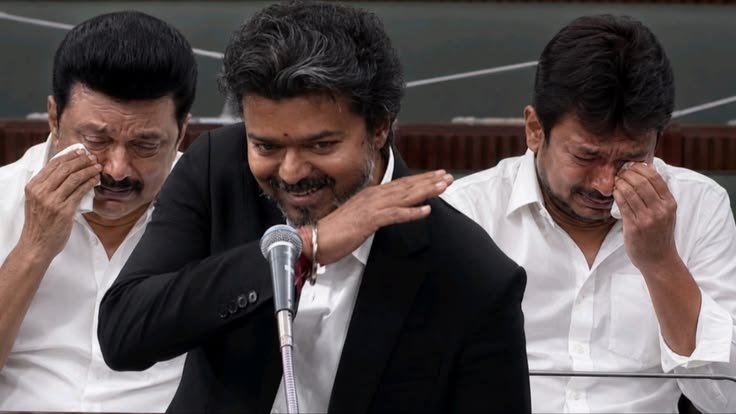
When Tamil cinema talks about larger-than-life heroes, one name always rises above the noise. Jana Nayagan Thalapathy Vijay stands as the emotional and cinematic peak of a journey that spanned more than three decades. This is not just another action drama. It is the last time fans got to see their Thalapathy on the big screen before he fully stepped into the role of Chief Minister of Tamil Nadu. Directed by H. Vinoth and produced under KVN Productions, the film arrived after months of delays, certification battles, and even a damaging piracy leak, yet it still managed to become one of the most talked-about releases of 2026.
The story follows Thalapathy Vetri Kondan, a former IPS officer who takes responsibility for raising the daughter of a deceased friend. He pushes her to overcome deep childhood trauma and chase her father’s dream of joining the Indian Army. At the same time, a dangerous antagonist played by Bobby Deol brings political intrigue, communal tension, and high-stakes action into the mix. What makes the experience special is the meta layer. Audiences were watching a man who had just become Chief Minister play a character who fights for the people and questions power itself. That real-world parallel gave every scene extra weight. From the packed first-day-first-show celebrations in Chennai to the global box-office numbers, Jana Nayagan Thalapathy Vijay became more than a movie. It turned into a cultural moment that blended cinema, politics, and pure fan emotion.
The Making of a Swan Song: How Jana Nayagan Came Together
Production on the film began in October 2024 in Chennai under the working title Thalapathy 69. Everyone already knew this would be Vijay’s sixty-ninth and final lead role. The official title Jana Nayagan, which translates to People’s Hero, was revealed in January 2025 and instantly clicked with fans. H. Vinoth, known for his stylish action films with Ajith Kumar, took on the dual role of writer and director. The project was always meant to be big. Reports placed the budget somewhere between three hundred and five hundred crore rupees, making it one of the most expensive Tamil films ever mounted.
Filming wrapped in August 2025 after extensive schedules that included prison sets, large-scale action sequences, and emotionally charged family moments. Anirudh Ravichander came on board for the music, delivering a soundtrack that mixed mass numbers with quieter emotional tracks. Cinematographer Sathyan Sooryan and editor Pradeep E. Ragav completed a technical team that knew how to handle star vehicles of this scale. What many people did not expect was how closely the narrative would echo Vijay’s own transition from cinema to politics. The film carries clear echoes of his real-life party Tamilaga Vettri Kazhagam even after the censor board softened some of the sharper references. That blend of personal and political made the production feel historic from the very first day of shooting.
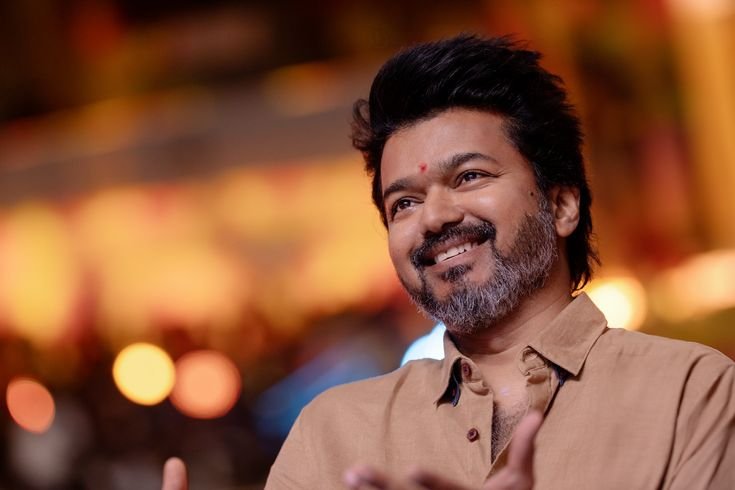
Plot Overview Without Spoilers: A Story of Protection, Power and Purpose
At its core, the narrative centres on a man who has already paid a heavy price for standing up for what he believes. Thalapathy Vetri Kondan is serving time when he forms a deep bond with an honest jailer whose young daughter becomes the emotional heart of the film. After tragedy strikes, Vetri steps into the role of guardian. He is determined to turn the girl into a strong, fearless individual capable of serving the nation as an army officer. Parallel to this personal mission runs a larger conflict involving a powerful and ruthless antagonist who thrives on fear, division and political manipulation.
The story expands beyond a simple revenge or protection tale. It weaves in themes of women empowerment, the cost of integrity, and the thin line between personal justice and public responsibility. Bobby Deol’s character brings a cold, calculating menace that feels different from the usual Tamil cinema villains. Pooja Hegde appears as a journalist who becomes entangled in the larger conspiracy, while Mamitha Baiju carries the emotional weight of the younger generation. The film never forgets it is a mass entertainer. There are high-octane action sequences, punchy dialogues, and moments designed for theatre cheers. Yet the quieter scenes between the guardian and his ward give it a surprising amount of heart. Many viewers walked out saying the father-daughter track was the most memorable part of the entire experience.
Cast and Performances That Carried Emotional Weight
Vijay delivers exactly what fans expected and a little more. As Thalapathy Vetri Kondan he balances the mass hero image with genuine warmth in the domestic scenes. His screen presence still commands the frame even after thirty-plus years of doing exactly that. Bobby Deol brings a polished intensity to the antagonist role and stands out as one of the stronger supporting performances. Mamitha Baiju proves she can hold her own opposite a superstar, especially in the later portions where her character grows into her own strength. Pooja Hegde adds glamour and purpose as the journalist who refuses to stay silent.
The supporting cast is stacked with familiar faces. Gautham Vasudev Menon plays the honest jailer with quiet dignity. Prakash Raj, Nassar, Priyamani and Narain fill out the political and emotional landscape with the kind of reliability Tamil audiences have come to expect. Even smaller roles feel purposeful because the film constantly circles back to ideas of community, responsibility and legacy. One of the most discussed elements was the subtle real-life cameos and references that made the theatre experience feel almost interactive for fans who had followed Vijay’s political journey.
Music, Technical Craft and the Theatrical Experience
Anirudh Ravichander’s score does a lot of heavy lifting. The background music elevates every mass moment and the songs themselves became instant fan favourites during the audio launch held in a packed stadium in Malaysia. The technical departments work overtime to keep a three-hour-plus runtime feeling energetic. Sathyan Sooryan’s camera captures both the intimate close-ups and the sprawling action set pieces with equal confidence. The editing keeps the narrative moving even when the screenplay tries to juggle too many ideas at once.
Watching the film in a packed theatre on opening day was an event in itself. Fans treated every entry, every dialogue and every action beat like a personal celebration. Whistles, cheers and emotional silences all coexisted in the same auditorium. That collective energy is something no OTT release can fully replicate, which is why so many people made it a point to catch Jana Nayagan Thalapathy Vijay on the big screen first.
Box Office Journey and Commercial Performance
Despite the long delay and the piracy setback that hit in April 2026, the film opened to strong numbers. Trackers reported an India nett of around two hundred and twenty-seven crore with a worldwide gross estimated between three hundred and three hundred and twenty-five crore. Those figures are respectable for a film that arrived months after its original Pongal target and after its star had already assumed office as Chief Minister. The overseas markets responded particularly well, driven by the massive Tamil diaspora that has followed Vijay for decades.
The commercial result also proved something important. Even when the critical consensus was mixed, the star’s personal connection with audiences remained intact. People came not only for the story but to say goodbye. That emotional factor turned ordinary shows into events and helped the film hold reasonably well in the weeks that followed. By the time it moved to OTT on Zee5 on twenty-first August 2026, a large section of the audience had already experienced it the way it was meant to be experienced – surrounded by fellow fans in a dark theatre.
Critical Reception and the Debate Around the Film
Reviews landed across a wide spectrum. Some critics called it an overstuffed crowd-pleaser that tried to be both a commercial entertainer and a political manifesto at the same time. Others appreciated the sincerity of Vijay’s performance and the genuine emotion in the central relationship. A common point of discussion was the film’s length and the way the second half introduces more political and ideological layers that sometimes feel rushed. The Hindu described it as equal parts tribute and manifesto wrapped inside an uneven but engaging masala package. India Today felt Vijay deserved a tighter farewell. Fan reactions on social media were far more positive, focusing on the emotional high points and the pure mass sequences.
What no one could deny was the historic nature of the release. Here was a sitting Chief Minister appearing in a major commercial film that had been shot before he took office. The timing alone made every review carry extra layers of meaning. Some saw the film as a carefully crafted political statement. Others simply enjoyed it as the last chance to watch their favourite hero do what he does best. Both readings coexisted comfortably among different sections of the audience.
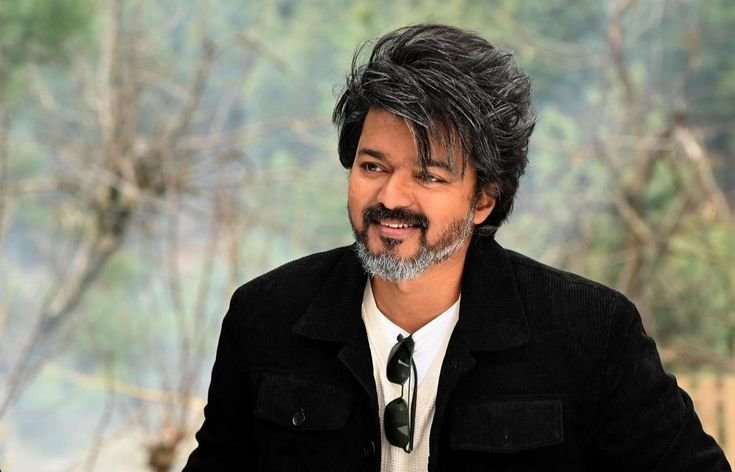
The Real-Life Context That Made Everything Bigger
By the time Jana Nayagan reached theatres in July 2026, Vijay had already been sworn in as Chief Minister of Tamil Nadu. That real-world development turned the film into something closer to a public event than a regular movie release. Fans were not just watching a character named Thalapathy Vetri Kondan. They were watching the man who now held the highest office in the state deliver dialogues about justice, integrity and public service. The parallel was impossible to ignore and the theatres responded accordingly.
This unique situation also explains why the certification process took so long and why certain references had to be softened. The film walks a careful line between fiction and the political reality surrounding its lead actor. That tightrope act is part of what makes the entire project fascinating. Very few films in Indian cinema history have been released under similar circumstances. The result is a movie that functions on multiple levels at once – as entertainment, as farewell, and as a soft extension of a political journey that had already begun.
Key Themes That Resonate Beyond the Screen
Women empowerment sits at the emotional centre of the story. The journey of the young girl from trauma to strength is written with care and gives the film its most consistent emotional through-line. Alongside that runs a broader conversation about what real leadership looks like. The film repeatedly asks whether power should be chased or whether service can exist outside formal positions. Those questions land differently when the man asking them on screen has just taken the highest political office in the state.
Communal harmony, the dangers of fear-based politics, and the importance of protecting democratic values also appear throughout the narrative. While some of these elements feel familiar from earlier H. Vinoth films, the personal connection to Vijay’s public image gives them fresh urgency. The movie never pretends to be a subtle art-house drama. It delivers its messages with the volume and clarity of a mass entertainer, which is exactly what its core audience wanted.
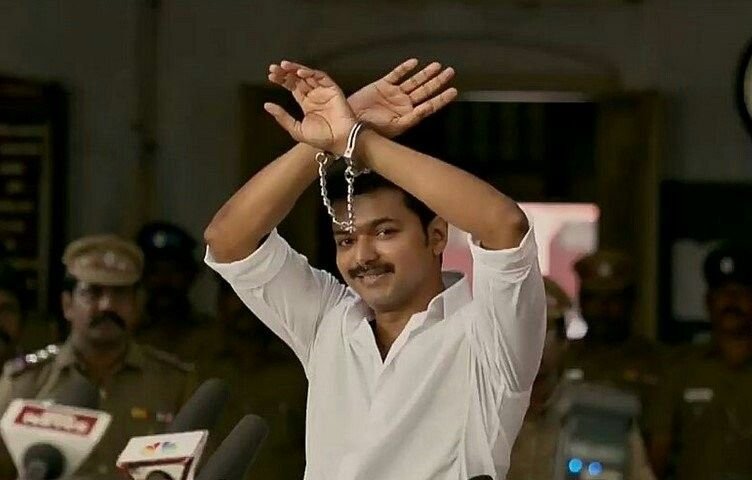
Comparison With the Source Material and Vijay’s Own Filmography
The film draws partial inspiration from the 2023 Telugu hit Bhagavanth Kesari starring Nandamuri Balakrishna. Director H. Vinoth has stated that the first half shares roughly sixty percent of its DNA with the original while the second half moves in a more original direction. The father-daughter emotional core remains, but the political and ideological layers feel tailored specifically for Vijay’s persona and the moment in which the film was released.
Looking at Vijay’s own body of work, Jana Nayagan sits comfortably alongside films like Sarkar and Bigil in its willingness to engage with social and political ideas. At the same time it retains the pure mass energy of Ghilli, Pokkiri and Master. It is not the tightest screenplay of his career, nor is it the most inventive. What it offers instead is a full-circle feeling – a chance for fans to see their hero one last time in the kind of larger-than-life role that made him a phenomenon in the first place.
Table of Key Facts About the Film
| Aspect | Details |
|---|---|
| Title | Jana Nayagan |
| Lead Actor | Thalapathy Vijay (as Thalapathy Vetri Kondan) |
| Director | H. Vinoth |
| Music | Anirudh Ravichander |
| Release Date | 23 July 2026 |
| Runtime | Approximately 183 minutes |
| Genre | Action Drama |
| Key Co-stars | Pooja Hegde, Bobby Deol, Mamitha Baiju |
| Estimated Budget | ₹300–500 crore |
| Worldwide Gross | Approx. ₹300–325 crore |
| OTT Premiere | Zee5, 21 August 2026 |
| Certification | A |
Memorable Quotes That Captured the Spirit of the Film
One of the most repeated lines among fans after the release was Vijay’s character declaring his refusal to back down: “I am coming.” The simple statement carried decades of star imagery and the knowledge that this was truly the final time audiences would hear him say it on screen.
Another moment that resonated deeply came during a quiet conversation about leadership. The character reflects that a real leader does not need a title to serve people. Given the real-life context of the actor’s own journey, the line landed with unusual force in theatres.
A third quote that circulated widely captured the protective spirit at the heart of the story: “You are my Superman.” Spoken by the young girl to her guardian, the line became shorthand for the emotional bond that many viewers considered the film’s strongest element.
The Cultural Impact and Fan Response
The release generated an outpouring of nostalgia across social media and in physical gatherings. Fans organised special screenings, shared old interviews, and created fan edits that mixed scenes from the new film with career-spanning montages. For a large section of the audience, this was not merely the end of an acting career. It was the closing of a chapter that had accompanied them from childhood into adulthood.
The film also sparked conversations about the relationship between cinema and politics in Tamil Nadu. Vijay’s transition is only the latest in a long tradition that includes M.G. Ramachandran and others. Jana Nayagan Thalapathy Vijay became the cinematic punctuation mark on that particular journey. Whether future historians treat the film as pure entertainment or as a soft political text, its place in the cultural memory of 2026 is already secure.
Why the Film Still Matters Months After Release
Even after the theatrical run ended and the OTT premiere took place, discussions around the movie continued. Some viewers returned for second and third watches simply to catch the smaller details they missed amid the opening-day frenzy. Others used the film as a starting point to revisit Vijay’s entire filmography. The availability on Zee5 in multiple languages helped the movie reach audiences who had missed it in theatres.
More importantly, the film serves as a time capsule. It captures a precise moment when one of Tamil cinema’s biggest stars completed his transition into full-time public life. Future generations who want to understand the intensity of Vijay’s fan following will find valuable evidence in the reactions that surrounded this particular release. The cheers, the emotional social media posts, and the packed theatres all form part of the larger story.
Looking at the Bigger Picture of Vijay’s Career
From his early days under his father S.A. Chandrasekhar’s direction to the superstardom that followed Ghilli and Pokkiri, Vijay’s journey has always been closely watched. Films like Thuppakki, Kaththi, Mersal and Master showed his willingness to experiment within the commercial format. Jana Nayagan arrives as the final entry in that long list. It may not rank as his absolute best work, but it feels like a fitting summary of the values he has projected on screen for years – protectiveness toward the vulnerable, resistance to corruption, and a stubborn belief that ordinary people deserve better.
The decision to end the acting chapter with a film that explicitly engages with leadership and public service feels intentional. Whether or not every narrative choice lands perfectly, the overall intention comes through clearly. This was meant to be a farewell that spoke to both the fans who filled the theatres and the larger public that had just elected him to the highest office in the state.
Conclusion: A Farewell That Will Be Remembered
Jana Nayagan Thalapathy Vijay will always occupy a unique place in Tamil film history. It is the last time audiences got to see their favourite star in a major commercial role. It is also a film that tried, sometimes successfully and sometimes less so, to bridge the gap between mass entertainment and political messaging. The performances, the music, the theatrical energy, and the real-world context all combined to create an experience that went beyond ordinary cinema.
For fans, the movie offered one final chance to cheer, whistle and feel the familiar rush that only a Thalapathy film can deliver. For the industry, it marked the end of an era that had dominated the box office for more than two decades. And for anyone interested in the intersection of cinema and public life in Tamil Nadu, it remains an essential cultural document of 2026. The curtain has closed on the actor, but the impact of that final performance continues to echo.
What is the basic storyline of Jana Nayagan Thalapathy Vijay?
The film follows a former police officer who becomes the guardian of a young girl after her father’s death. He works to help her overcome trauma and pursue a career in the Indian Army while simultaneously confronting a powerful and dangerous antagonist who threatens social harmony and democratic values. The narrative blends personal emotion with larger political and social themes, creating a mass entertainer that also carries clear ideological undercurrents.
Who directed Jana Nayagan and who composed the music?
H. Vinoth wrote and directed the film. Known for his previous collaborations with Ajith Kumar, he brought a mix of stylish action and social messaging to the project. Anirudh Ravichander handled the music, delivering both energetic mass numbers and emotionally resonant background scores that became major talking points among fans after the audio launch.
When did Jana Nayagan Thalapathy Vijay release and where can it be watched now?
The film released worldwide in theatres on 23 July 2026 after several delays related to certification and a piracy incident. It later premiered on the streaming platform Zee5 on 21 August 2026 and remains available there in multiple South Indian languages as well as with other language options.
How did critics and audiences respond to the film?
Critical reception was mixed. Many reviewers praised Vijay’s screen presence and the emotional core of the guardian-ward relationship while noting that the screenplay felt overstuffed and uneven in its second half. Audience response, particularly in theatres, was far more enthusiastic. Fans celebrated the mass moments, the dialogues, and the historic nature of watching their favourite star’s final film.
Why is Jana Nayagan considered historically significant beyond being just a movie?
The film arrived after Vijay had already assumed office as Chief Minister of Tamil Nadu. That timing turned the release into a unique cultural event where cinema and real-world politics overlapped in a way rarely seen before. It served as both a commercial farewell to a major star and a soft reflection of the public values the actor had begun projecting in his new political role.