Best Rocoto Relleno Near Me: Your Ultimate Guide to Finding Authentic Peruvian Stuffed Peppers

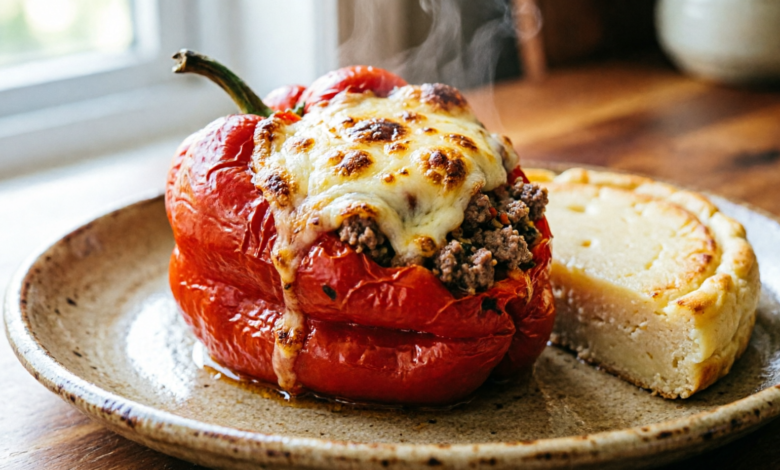
If you have ever typed “best rocoto relleno near me” into a search bar after a sudden craving hits, you already know the struggle. This fiery, cheesy, meat-stuffed Andean pepper is not as common as tacos or pizza on every corner, yet once you taste a properly made version the hunt becomes worth every mile. Rocoto relleno comes from the highlands of Arequipa, Peru, where the thick-walled, apple-shaped rocoto pepper gets hollowed, tempered of its intense heat, filled with savory ground meat, olives, hard-boiled egg, and often raisins or peanuts, then blanketed in melting cheese and baked until the edges blister just right. Served beside a creamy pastel de papa, it delivers heat, richness, and comfort in every bite.
Finding the best rocoto relleno near me means looking beyond generic “Peruvian food” labels. Not every restaurant that lists lomo saltado or ceviche will treat the rocoto with the care it deserves. Authentic versions respect the pepper’s fruity undertone while balancing the spice so it warms rather than overwhelms. In cities with growing Peruvian communities—New York, Los Angeles, Miami, Houston, or smaller pockets like parts of Pennsylvania and California—you can locate spots that source real rocoto or close substitutes such as manzano peppers. This guide walks you through the history, what makes a plate exceptional, practical search strategies, flavor profiles, and how to judge quality so your next search for the best rocoto relleno near me ends with a plate that feels like a trip to an Arequipa picantería.
The Rich History and Legend Behind Rocoto Relleno
Rocoto relleno carries centuries of Andean tradition mixed with colonial influences and a healthy dose of folklore. The rocoto itself, Capsicum pubescens, grew in the Andes long before the Spanish arrived. Incas valued its distinctive heat and fruity notes, cultivating it at elevations between 1,500 and 2,900 meters. Over time the stuffed preparation took shape in the kitchens of Arequipa, the “White City” known for its robust picantería culture—simple, flavorful eateries where locals gathered for spicy dishes and chicha.
A popular legend credits the dish’s dramatic creation to a nineteenth-century cook named Manuel Masías. According to the tale retold by Peruvian writer Carlos Herrera, Masías lost his young daughter and descended into the underworld to reclaim her soul from the devil. To win her freedom he prepared an extraordinary banquet. The standout dish was the stuffed rocoto, so delicious that the devil himself released the girl and supposedly turned toward the light. Whether pure fiction or embroidered history, the story captures the intensity of the dish and the pride Arequipeños feel for it.
In reality the preparation evolved in rural communities and picanterías. Cooks learned to boil the peppers multiple times in salted water, sometimes with vinegar or a touch of sugar, to dial back the heat without erasing the flavor. The filling combined available meats—often a mix of beef and pork—with onions, garlic, aji panca, cumin, and whatever additions the season offered. Cheese on top and the accompanying potato cake turned it into a complete, satisfying meal. Today the dish appears on menus far beyond Arequipa, yet the best versions still echo those highland roots. When you search for the best rocoto relleno near me, you are really searching for that same balance of heat, savor, and tradition.
Understanding the Ingredients That Define Authentic Flavor
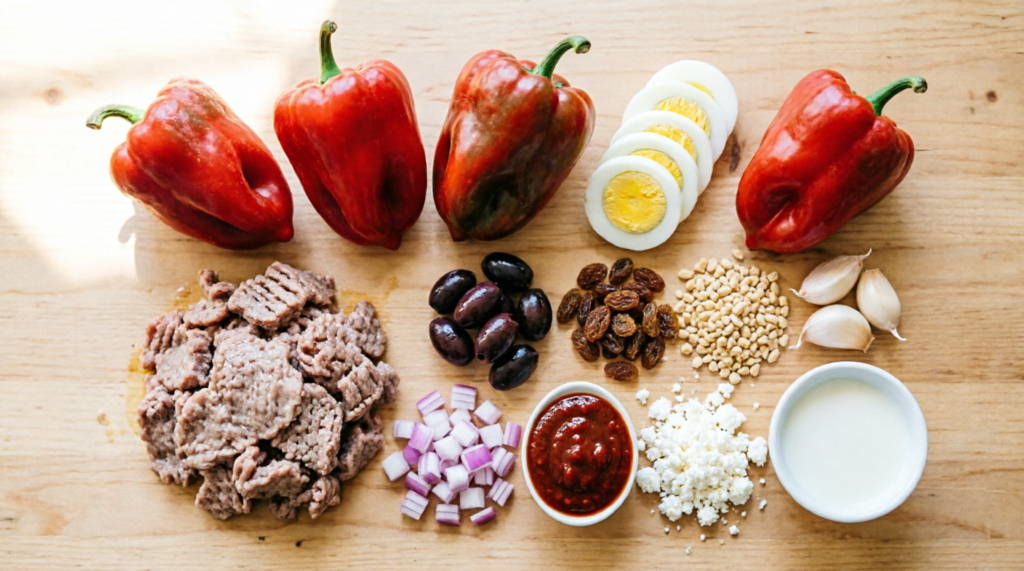
A great rocoto relleno starts with the pepper. Fresh rocoto is thick-walled, round, and ranges from bright red to yellow or even dark. Its heat sits well above a jalapeño, sometimes ten times hotter, yet it carries a fruity, almost apple-like sweetness that milder peppers lack. Outside Peru fresh specimens remain scarce. Many U.S. cooks and restaurants turn to manzano peppers, which belong to the same species and deliver similar texture and heat when treated properly. Frozen whole rocotos occasionally appear in Latin markets and work surprisingly well once thawed and prepared.
The filling usually centers on finely chopped or ground beef, sometimes mixed with pork for richness. Onions and garlic form the aromatic base, joined by aji panca paste for earthy depth, cumin, oregano, and black pepper. Hard-boiled eggs, black olives, raisins, and ground peanuts or pecans appear in classic Arequipa-style recipes, adding pockets of contrast—salty, sweet, and nutty against the meat. Some modern versions lean lighter or incorporate peas and carrots, especially in Cusco-style preparations that get sealed with egg batter and fried instead of baked with cheese.
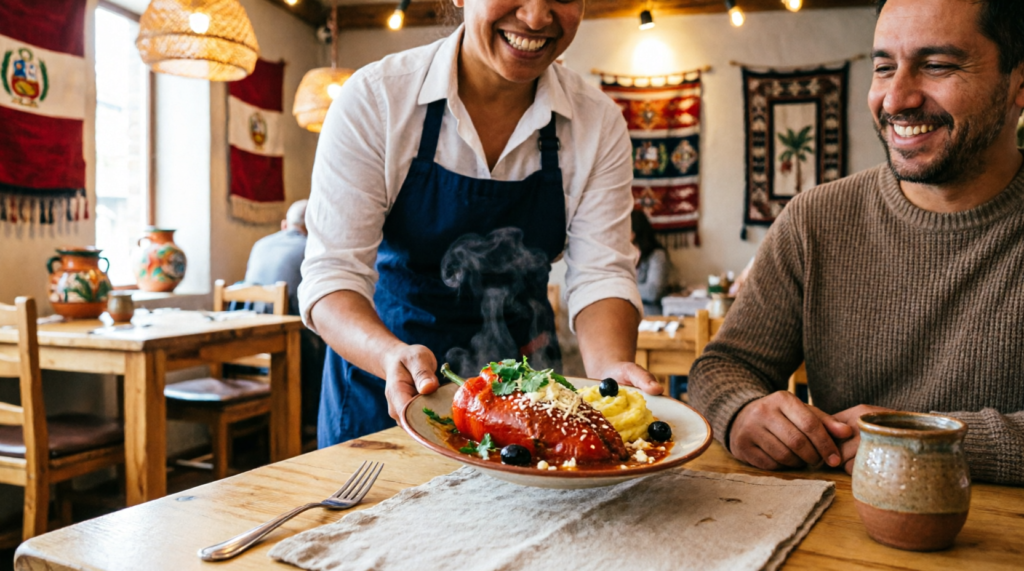
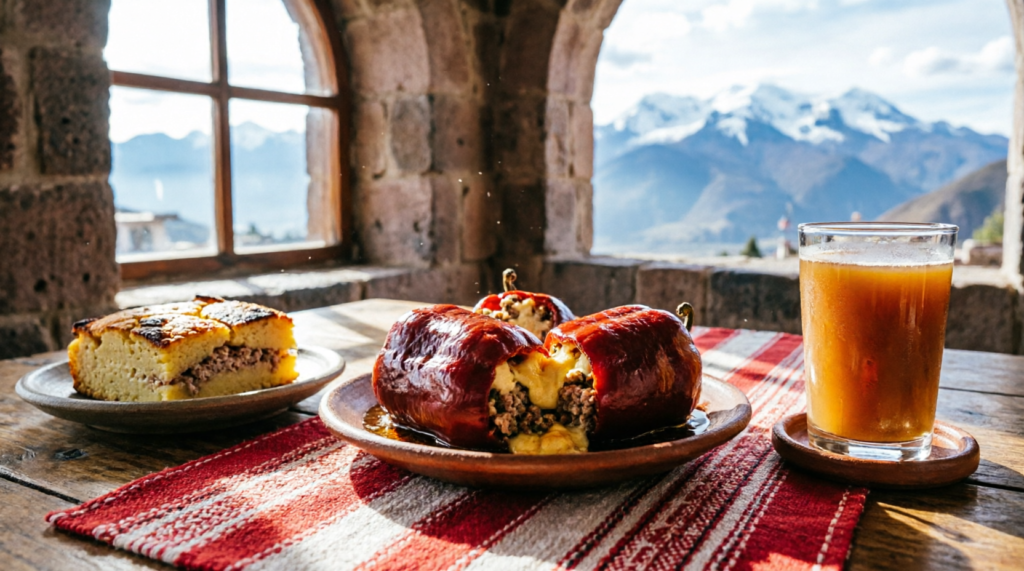
Cheese crowns the stuffed pepper. Queso fresco or a similar mild melting cheese softens in the oven and browns at the edges. A simple milk-and-egg mixture sometimes bathes the peppers before baking, creating a creamy sauce that soaks into the filling. The traditional side, pastel de papa, layers mashed potatoes with cheese and more of the same creamy mixture, baked until golden. Together they create a plate that feels both rustic and carefully composed. When evaluating the best rocoto relleno near me, pay attention to whether these elements feel intentional rather than afterthoughts.
How to Search Effectively for the Best Rocoto Relleno Near Me
Start with precise language. Typing “best rocoto relleno near me” already filters out generic Peruvian spots that never list the dish. Add your city or neighborhood for tighter results. Check Google Maps, Yelp, and OpenTable filters for Peruvian or South American cuisine, then scan menus online for the exact name. Photos help—look for whole peppers topped with melted cheese rather than chopped or sauced versions that dilute the concept.
Read recent reviews carefully. Mentions of “spicy but balanced,” “authentic Arequipa style,” or “served with pastel de papa” signal serious intention. Comments about heat levels, cheese quality, or portion size reveal whether the kitchen understands the dish. Call ahead if the menu is vague; many smaller places prepare rocoto relleno only on certain days or by request because the peppers require advance prep.
Community knowledge matters. Peruvian Facebook groups, local food forums, or Reddit threads in cities with large diaspora populations often share honest recommendations. Farmers markets or Latin grocery stores sometimes know which restaurants buy their peppers. Delivery apps can surface options, yet dining in usually delivers better texture and temperature. Persistence pays off. The best rocoto relleno near me rarely sits on every street corner, but once located it becomes a regular craving.
What Sets a Truly Outstanding Plate Apart
Heat control separates good from great. The pepper should still carry warmth and its distinctive fruitiness, never tasting like plain bell pepper. Over-boiling kills both spice and character. Under-preparing leaves an aggressive burn that masks everything else. The filling needs to stay moist yet hold its shape—neither dry nor swimming in grease. Spices should taste layered rather than one-note cumin or pure heat.
Cheese matters. It should melt into the top without forming a rubbery sheet or disappearing entirely. The potato side should complement rather than compete, offering creamy contrast to the pepper’s intensity. Presentation counts too. A whole stuffed rocoto looks inviting when the cheese bubbles and the pepper skin shows a slight char. Temperature at the table is crucial; lukewarm versions lose their appeal.
Portion size and value complete the picture. Authentic servings feel generous without overwhelming. When these details align, you know you have found something special. Many diners describe the experience with words that stick: “It tasted like my grandmother’s kitchen in Arequipa,” or “The heat hit just right and the cheese pulled perfectly.” Those reactions mark the difference between average and the best rocoto relleno near me.
Exploring Regional Variations and Modern Twists
Arequipa-style remains the gold standard: whole peppers boiled to temper heat, filled with meat mixture, topped with cheese, baked, and paired with pastel de papa. Cusco versions sometimes split the peppers lengthwise, soak them in lime water, and finish by sealing with egg batter before frying. Some coastal or Lima restaurants lighten the filling or add seafood elements, though purists prefer the highland original.
Outside Peru, cooks adapt. Bison or turkey might replace beef for leaner profiles. Vegetarians experiment with quinoa, mushrooms, or cheese-heavy fillings, though traditionalists argue the dish loses its soul without the meaty base. Cheese choices expand to include available melting varieties when queso fresco is scarce. The core idea—stuffed spicy pepper, savory interior, creamy finish—stays intact.
These variations appear more often in larger U.S. cities where chefs experiment while respecting roots. When hunting the best rocoto relleno near me, decide whether you want strict tradition or a thoughtful update. Both can satisfy if executed with care.
Practical Tips for Ordering and Enjoying the Dish
Ask about heat level. Good kitchens can adjust by removing more seeds and membranes or by offering a milder substitute. Request the pastel de papa if it is not automatic; the pairing elevates the whole experience. Share if portions run large, especially when trying multiple dishes. Pair with a cold drink—chicha morada, a light beer, or even milk if the heat surprises you.
Eat while hot. The cheese stretches best and the pepper skin stays tender. Leftovers reheat reasonably in an oven, though the texture softens. Note the restaurant’s overall approach to Peruvian classics. Places that nail causa, aji de gallina, or anticuchos often treat rocoto relleno with equal respect.
Seasonal availability can affect quality. Fresh peppers taste brighter when in season or properly frozen. Building a relationship with a local spot increases the chance they will prepare it for you even if it is not listed daily. These small habits turn a one-time search for the best rocoto relleno near me into a reliable source of satisfaction.
Comparing Quality Across Different Types of Restaurants
Picantería-style or family-run Peruvian spots often deliver the most soulful versions. Recipes travel with the cooks, and ingredients stay close to tradition. Upscale Peruvian restaurants may refine presentation and balance heat for broader audiences while keeping flavors authentic. Casual Latin American or fusion places sometimes offer simplified takes that still please when executed well.
Chain or highly Americanized spots rarely capture the dish’s essence. Look for menus written in Spanish or bilingual, photos of whole stuffed peppers, and staff who can discuss preparation. Price alone is not a reliable guide. Some modest places charge little and still produce outstanding results because they cook for their community first.
Reviews that mention specific elements—cheese pull, spice balance, potato cake—carry more weight than generic praise. Cross-check recent dates; kitchens change. When several independent signals point the same direction, you have likely found a contender for the best rocoto relleno near me.
A Helpful Comparison of Key Elements in Quality Rocoto Relleno
| Element | Authentic High-Quality Version | Common Shortcuts or Weak Versions |
|---|---|---|
| Pepper | Real rocoto or quality manzano, properly tempered | Bell pepper or under-prepped hot pepper |
| Filling | Seasoned ground meat with egg, olive, raisin notes | Plain ground beef with minimal spice |
| Cheese | Mild melting cheese that browns and stretches | Sparse or rubbery topping |
| Side | Pastel de papa or similar creamy potato | Plain fries or nothing |
| Overall Balance | Heat, fruitiness, richness in harmony | Either bland or overwhelmingly spicy |
This table highlights what separates memorable plates from forgettable ones. Use it as a mental checklist when reading menus or reviews.
Quotes from Diners and Critics That Capture the Experience
One traveler who sought out classic Arequipa cooking wrote: “She uses many of the same classic recipes—some more than a century old—that her mother and grandmother used, and her preparations of regional standards such as rocoto relleno have become the definitive recipes.” The comment underscores how tradition still guides the best kitchens.
Another diner simply exclaimed: “A pepper stuffed with beef stew covered with a melted cheese sauce! Crazy! I recommend going…” The spontaneous excitement reflects what happens when heat, meat, and cheese align perfectly.
A third review noted: “This tasty restaurant offers one of the boldest stuffed rocotos, full of meat and with lots of cheese. The food at this restaurant also stands out for its reasonable prices.” Boldness balanced by value remains a recurring theme among people who find the best rocoto relleno near me.
These voices remind us that the dish creates lasting impressions when done right.
Expanding Your Search Beyond Major Cities
Peruvian communities exist in unexpected places. Smaller cities and suburbs sometimes hide excellent family-run spots that never appear on national lists. Check local Latin markets for recommendations. Ask about catering or special-order options; many places will prepare rocoto relleno with advance notice even if it is not a daily special.
Road trips or weekend drives can expand possibilities. A highly rated place an hour away may be worth the journey when the craving intensifies. Online communities often share addresses that algorithms miss. Persistence and curiosity turn the phrase “best rocoto relleno near me” into a broader, more rewarding exploration.
Pairing Suggestions and Full Meal Ideas
Start with a lighter appetizer such as causa or a simple salad to prepare the palate. The main plate of rocoto relleno and pastel de papa already feels substantial, so avoid heavy sides. A refreshing drink cuts the richness and cools residual heat. For dessert, something mild like suspiro limeño or fresh fruit keeps the meal balanced.
Wine or beer pairings lean toward lighter reds or crisp lagers that do not fight the spice. Non-alcoholic options such as chicha morada or passion-fruit juice work equally well. Thinking of the whole meal elevates the experience beyond a single dish and makes the search for the best rocoto relleno near me part of a larger enjoyable outing.
Common Mistakes to Avoid When Seeking Authentic Versions
Assuming every Peruvian restaurant serves it leads to disappointment. Confirm availability. Ignoring heat tolerance can ruin the meal for sensitive diners; ask questions. Settling for the first result without reading recent feedback wastes opportunities. Overlooking the potato side means missing half the traditional pleasure.
Rushing the meal also diminishes enjoyment. The dish rewards slow appreciation of textures and layered flavors. By avoiding these pitfalls you increase the odds of a successful hunt for the best rocoto relleno near me.
The Growing Popularity of Peruvian Cuisine and Its Effect on Availability
Peruvian food has moved from niche to mainstream in many countries. Ceviche and lomo saltado opened doors, and secondary classics like rocoto relleno now appear more frequently. As demand grows, more restaurants source better ingredients and train staff in traditional techniques. This trend benefits anyone searching for quality versions close to home.
At the same time authenticity can dilute if kitchens prioritize speed or broad appeal over careful preparation. Supporting places that take the time helps preserve the dish’s character. Your repeated searches and positive reviews for the best rocoto relleno near me encourage more restaurants to do it justice.
Practical Home Preparation Insights for Better Appreciation
Understanding the process deepens respect for restaurant versions. Preparing the peppers requires patience—multiple boils, thorough cleaning of seeds and veins, careful stuffing without tearing the walls. The filling benefits from slow cooking so flavors meld. Baking finishes everything with gentle heat that melts cheese without drying the interior.
Even if you never cook it yourself, knowing these steps helps you recognize skill when you taste a professional plate. It also explains why some restaurants offer the dish only on certain days: the prep is labor-intensive. That knowledge makes finding the best rocoto relleno near me feel like discovering true craftsmanship.
Building a Personal List of Reliable Spots
Keep notes on places that deliver. Record heat level, cheese quality, side dishes, and overall satisfaction. Over time a short personal ranking emerges. Share discoveries with friends who share the craving; local knowledge multiplies. Revisit favorites seasonally to check consistency.
This ongoing relationship turns a one-time search into a living resource. The next time you type “best rocoto relleno near me,” you already know several strong candidates and can focus on new possibilities.
Why the Dish Continues to Captivate New Generations
Rocoto relleno offers more than spice. It balances bold heat with comforting richness, fruitiness with savory depth, and tradition with approachable pleasure. In an era of endless food trends, a dish rooted in highland kitchens and family recipes still feels special. Each successful search reconnects diners to a specific place and history while satisfying an immediate craving.
The combination of legend, technique, and sensory impact keeps people coming back. Whether you discover it in a busy city restaurant or a quiet family spot, the plate leaves an impression that lingers long after the heat fades.
Conclusion
Searching for the best rocoto relleno near me opens a doorway into one of Peru’s most distinctive regional dishes. From the high-altitude peppers of Arequipa to the carefully balanced plates appearing in restaurants across the United States and beyond, the experience rewards curiosity and attention to detail. Understanding the history, ingredients, and markers of quality turns a simple craving into a more informed and enjoyable pursuit. Whether you find a classic version served with pastel de papa or a thoughtful modern take, the combination of heat, cheese, and savory filling delivers satisfaction that few other stuffed peppers match. Keep refining your search, support the kitchens that respect tradition, and enjoy every spicy, cheesy bite.
What exactly is rocoto relleno and why is it special?
Rocoto relleno is a traditional Peruvian dish from Arequipa featuring a spicy rocoto pepper stuffed with seasoned ground meat, often including hard-boiled egg, olives, and other accents, then topped with cheese and baked. Its special character comes from the pepper’s unique fruity heat combined with rich filling and creamy potato accompaniment, creating a balance rarely found in milder stuffed-pepper dishes. When you look for the best rocoto relleno near me you are seeking that specific harmony of flavor and tradition.
How can I find authentic versions if fresh rocoto peppers are hard to source?
Many restaurants use high-quality frozen rocotos or manzano peppers from the same species, which deliver similar texture and heat when prepared correctly. Check Latin markets, ask restaurant staff about their sourcing, and read reviews that mention authentic heat and flavor. Persistent local searching for the best rocoto relleno near me often uncovers places that handle substitutes with skill.
Is the dish always extremely spicy?
Proper preparation tempers the heat through multiple boils and careful removal of seeds and membranes, leaving warmth and fruitiness rather than overwhelming burn. Kitchens can often adjust further on request. Asking about heat level when ordering the best rocoto relleno near me helps match the plate to your tolerance.
What side dish traditionally accompanies rocoto relleno?
Pastel de papa, a baked layered potato cake enriched with cheese and a creamy mixture, is the classic partner. It provides mild, comforting contrast to the spicy stuffed pepper. Confirming its presence is one easy way to identify more traditional offerings when searching for the best rocoto relleno near me.
Can I expect to find this dish outside major cities with large Peruvian communities?
Yes, though less frequently. Family-run spots in smaller towns or suburbs sometimes prepare it, especially with advance notice. Exploring Latin grocery recommendations and local food groups expands the map beyond big-city centers and improves your chances of locating the best rocoto relleno near me wherever you live.